
The 5 Sections Every Service-Based Homepage Needs
If your homepage feels pretty but not profitable… this is whyIn my most unpopular opinion:
Most service-based websites don’t have a design problem… they have a structure problem.
Like yes, she’s cute.
But is she converting? 🫠
Because your homepage isn’t just there to exist.
It should be guiding people from:
“hmm interesting…” → “wait I need this” → “okay where do I book”
That’s what I call your Revenue Flow Framework
(aka: your website actually doing its job)
Let’s break it down.
1. The “This is for you” section (Hero)
This is your first impression.
And no, “Welcome to my website” is not it.
Within 3 seconds, someone should know:
What you do
Who it’s for
Why they should care
If they have to think… they’re gone.
Think: clarity over cleverness. Always.
Try using this sentence as a base:
”I create [what] for [who] so that they [why/result]”
2. The “I see your problem” section
This is where you make people feel understood.
Call out what they’re struggling with:
What’s not working
What’s frustrating
What they’ve already tried
Because when someone feels seen, they stay.
This is the difference between:
“nice website” and
“wait… this is literally me”
3. The “Here’s the shift” section
Now we move from problem → possibility.
Paint the picture of what life/business looks like after working with you.
Not just features.
Not just deliverables.
We’re talking:
How it feels
What changes
What becomes easier
This is where desire starts building.
4. The “How I help” section
Okay now you can talk about your offer.
But keep it simple.
No overwhelming lists or bullet points.
No 17 services.
Just:
What you offer
Who it’s for
What outcome it gets them
Your goal here isn’t to explain everything.
It’s to make them want the next step.
5. The “Proof this actually works” section
Right before someone takes action… they need reassurance.
Not more explaining.
Not more convincing.
Just proof.
This is where you show:
Client results
Transformations
Testimonials that feel real (not robotic or AI pls)
Because people are thinking:
“Okay… but will this work for me?”
And this section answers that without you having to say a word.
Pro tip:
Skip the “she was amazing to work with!!” testimonials.
We want:
What their problem was
What changed
What the result was
Make it feel like a mini before/after story.
6. The “Let’s do this” section (CTA)
Now they’re sold.
Now they trust you.
Now they just need direction.
If your homepage ends with vibes and no next step… respectfully, what are we doing.
Tell them exactly what to do:
👉 Apply
👉 Book
👉 Inquire
Pick one. Not all three.
And make it feel simple, not high-pressure.
Respectfully, Your homepage shouldn’t feel like a portfolio.
It should feel like a guided experience.
That’s the whole point of the Revenue Flow Framework (trademark pending) —
moving people naturally from curiosity → clarity → conversion.
Because when your website is structured right?
You stop chasing clients…
and start attracting the right ones.
Meet the AuthorOdalys Ogma
Hi there, Odalys here.
Grab your favorite cozy drink (mine’s an iced mocha, always) and scroll through some quick insights from my brain as a designer, mom, and business owner. If something clicks for you, I’d love to hear it. Your feedback genuinely helps me grow.
more of the latest

follow along on IG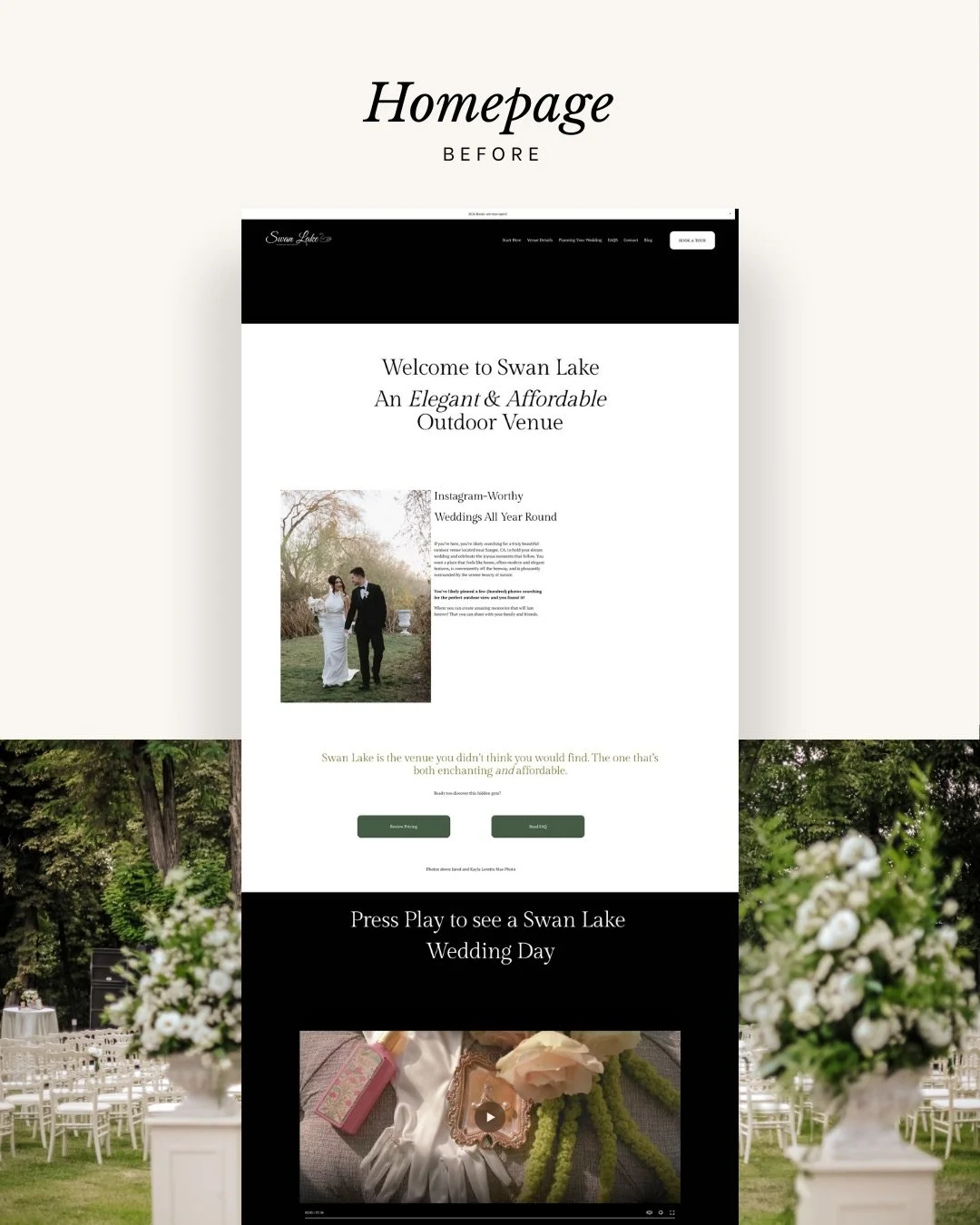


because I became obsessive about my website.